
Tulsa Distracted Driving Accident Lawyer
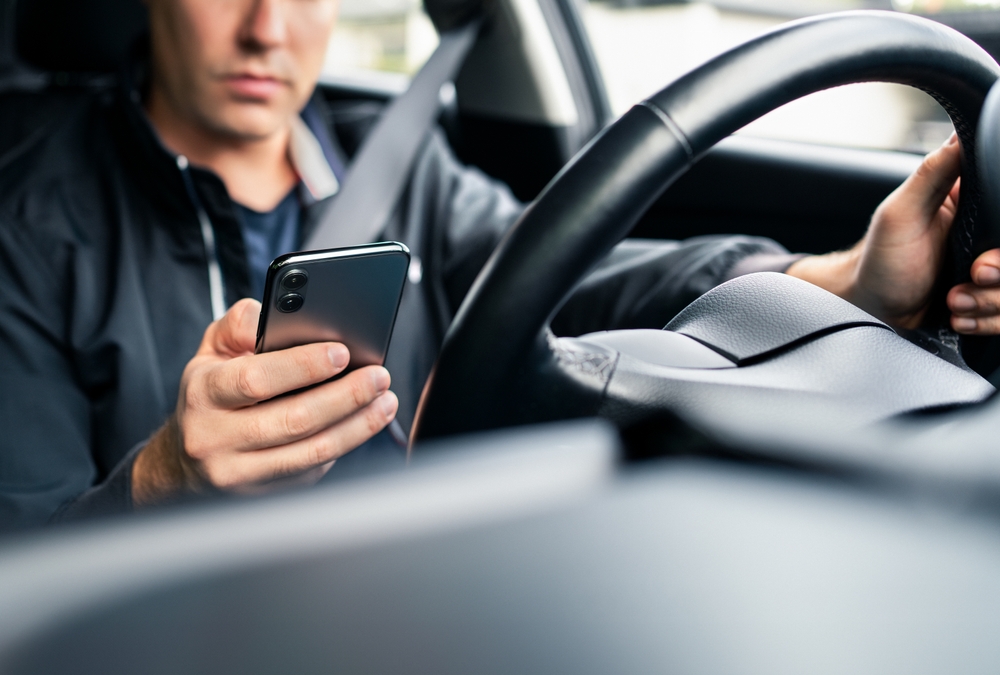
If a driver looked at a phone instead of the road and hit you, the frustration of knowing the crash was preventable sits right alongside the injuries. Our Tulsa distracted driving accident lawyer at Lloyd & Lloyd represents people hurt by drivers who were texting, scrolling, or otherwise not paying attention. We focus on proving the distraction with the digital records it leaves behind.
You may already suspect the other driver was looking at a phone, but suspicion alone rarely moves an insurance company. The texts, app activity, and vehicle data that prove it often disappear sooner than people expect, so call 918-246-0200 for a free case evaluation while that evidence still exists.
What Evidence Proves a Driver Was Distracted?
Digital records are the strongest proof that a driver was distracted, because phones and vehicles log activity down to the second. The challenge is that much of this data is held by phone carriers, app companies, and automakers, and some of it is kept only for limited periods. Getting it requires prompt preservation requests and, once a lawsuit is filed, subpoenas.
Here is the evidence we pursue and what each source tends to show:
| Evidence | What it may show | Who usually holds it |
|---|---|---|
| Cell phone records | Calls, texts, and data use in the minutes before impact | The driver’s wireless carrier |
| App and messaging timestamps | When the driver sent, opened, or typed a message | The app provider or the phone itself |
| Infotainment and telematics data | Screen touches, connected-phone activity, speed, and braking | The vehicle and its manufacturer |
| Event data recorder (crash data) | Speed, throttle, braking, and steering just before the crash | The vehicle’s onboard module |
| Dashcam and surveillance video | Head-down posture, drifting, or no braking before impact | Nearby businesses, other drivers, and traffic cameras |
| Social media activity | Posts, stories, or check-ins made around the time of the crash | The platform and the driver’s own accounts |
No single item usually tells the whole story. A carrier log might show data use at 5:42 p.m., a business camera might show the car drifting at the same minute, and the crash data might show no braking until impact, which together make the distraction hard to deny.
Why a Preservation Letter Goes Out Early
Carriers, app companies, and businesses routinely overwrite or delete older records as part of normal operations. A preservation letter puts the driver and record holders on notice to keep specific data, which makes it much harder for that evidence to disappear. Surveillance video is often the first casualty, so we move on it within days when possible.
Building the Timeline
We line up each record by the minute against the police report and witness accounts. A consistent timeline turns a suspicion of phone use into proof that a jury or insurer is likely to accept. It also shows how much time the driver had to react, which answers the common defense that the crash was unavoidable no matter what the driver did.
At the Scene, if You Suspect the Driver Was Texting
Tell the responding officer what you saw, such as the driver looking down, holding a phone, or never braking. Write down the names of witnesses who noticed the same thing, and photograph the inside of the other car if you are able to do so safely. Those early observations point investigators to the right records later.
When the Driver Denies Touching the Phone
Many distracted drivers tell the officer they were watching the road. Records rarely support that claim when phone use was involved, and a denial that the evidence later contradicts often damages the driver’s credibility on every other point in the case.
What Does Oklahoma’s Distracted Driving Law Prohibit?
 Oklahoma bans texting while driving and, since November 2025, bans holding a phone at all in marked school zones and road construction zones. A separate statute requires every driver to give full time and attention to driving. Here are the rules that come up most in Tulsa claims:
- Texting while driving: It is illegal to use a hand-held device to manually compose, send, or read a text message while the vehicle is moving, under 47 O.S. § 11-901d. Text messages include emails, instant messages, photos, and video.
- School and work zones: In a properly marked school zone with a reduced speed limit, or in a road construction zone, a driver may not text or hold or use a hand-held phone under 47 O.S. § 11-901e, which took effect November 1, 2025.
- Full time and attention: Oklahoma requires every driver to devote full time and attention to driving, which includes distractions beyond phones.
- Commercial, school bus, and transit drivers: Oklahoma bars these drivers from texting and bars commercial drivers from using a hand-held phone, with limited exceptions, and a violation is a misdemeanor.
The texting ban has limits. It doesn’t apply to emergency calls, to devices built into the vehicle, or to hands-free and voice-operated use, and it applies only while the vehicle is in motion.
A Ticket Helps but Isn’t Required
A citation for texting carries a fine of up to $100, according to the Oklahoma Department of Transportation, and it supports an injury claim. Even so, a civil claim doesn’t depend on a ticket. Officers often don’t see the phone use, and the records gathered later may prove what the officer missed.
Visual, Manual, and Cognitive Distraction
Distraction comes in three forms, and the most dangerous activities combine all of them. A driver may be looking away from the road, have a hand off the wheel, or have their mind somewhere else entirely. Phones grab attention in all three ways at once, which is why texting is treated so seriously.
The three categories work like this:
- Visual: Eyes off the road, such as reading a text, checking a map, looking at a passenger, or glancing at an in-dash screen.
- Manual: Hands off the wheel, such as typing, eating, drinking, grooming, or reaching for something on the floor.
- Cognitive: Mind off driving, such as an intense phone conversation, daydreaming, or replaying an argument.
In-vehicle touchscreens are worth a closer look. Changing settings or scrolling through menus on a large display may pull a driver’s eyes and hands away as much as a phone does, and the vehicle’s own data often records those interactions.
Proving Distraction That Leaves No Phone Record
Eating, reaching for a dropped item, or turning to a child in the back seat doesn’t show up in a carrier log. Those claims rely on witness accounts, video, the driver’s own statements, and crash data showing a car that drifted or never braked. A driver who failed to react to a hazard in plain view usually wasn’t watching the road, whatever the reason.
Oklahoma’s full time and attention requirement gives these claims a statutory anchor even without a phone. Officers may cite a driver under that rule after a crash, and the same conduct supports a negligence claim.
Negligence Per Se in a Distracted Driving Claim
Negligence per se means a driver’s violation of a safety statute may establish the careless conduct a claim requires. Oklahoma courts apply it when the violation caused the injury, the injury is the type the statute was meant to prevent, and the injured person belongs to the group the statute protects. Texting and phone bans exist to prevent crashes that hurt other road users, which fits that test closely.
The doctrine works in steps:
- Prove the driver violated the statute, such as by reading a text while moving.
- Show the violation caused the crash and your injuries.
- Show you are someone the law was meant to protect, such as another driver, a passenger, or a cyclist.
- Prove the damages that resulted.
Negligence per se doesn’t end the fault question. Oklahoma’s modified comparative negligence rule still lets the insurer argue that you share some blame, and your recovery is reduced by your share as long as it isn’t greater than the other driver’s. If a jury values a claim at $60,000 and finds the texting driver 90% at fault and you 10% for speeding, you recover $54,000.
What Losses Does a Distracted Driving Claim Cover?
 A claim against a distracted driver in Oklahoma covers the financial and personal losses the crash caused. Proving distraction doesn’t add a separate category of damages, but clear evidence of careless phone use often makes an insurer more realistic about the value of the claim.
Financial Losses
Medical bills, future treatment, prescription costs, lost wages, and any reduction in your ability to earn make up the financial side. Vehicle repair or replacement and rental costs belong here too.
Personal Losses
Pain, physical limitations, sleep problems, anxiety behind the wheel, and missed time with family are part of the claim as well. We document how the injuries affect daily life, because those details help an adjuster or jury understand the full cost.
How Long Do You Have to File a Distracted Driving Claim in Oklahoma?
Most Oklahoma personal injury lawsuits must be filed within two years of the crash. Exceptions may change that period, and claims involving a government vehicle require written notice much sooner. Because the digital evidence in these cases fades far faster than the filing deadline, the practical deadline is often the evidence, not the statute.
Medical Records Carry the Damages Side
Proving distraction establishes fault, but your medical records establish what the crash cost you. Prompt treatment, consistent follow-up, and records of missed work give the damages side of the claim the same strength as the evidence of phone use.
Why Work With Lloyd & Lloyd After a Distracted Driving Crash?
Distracted driving claims are won with records, and we focus our early work on getting them. Our attorneys work with people hurt by careless drivers throughout Tulsa.
What we bring to these claims:
- Fast preservation work: We send preservation letters for phone, app, vehicle, and video records before routine deletion catches up.
- Subpoenas when needed: If the case goes to suit, we request carrier and app records through the court process.
- A minute-by-minute timeline: We match the digital records to the crash report and witness accounts.
- Ready for litigation: When an insurer refuses to take the records seriously, we are prepared to file suit, often in Tulsa County District Court.
Every case rests on its own evidence, and past outcomes never predict a future one. If a distracted driver hit you, call 918-246-0200 for a free case evaluation.
FAQs: Tulsa Distracted Driving Accidents
Is it illegal to hold your phone while driving in Tulsa?
Holding a phone while driving is illegal in Tulsa inside marked school zones and road construction zones. The Tulsa City Council passed an ordinance in December 2025 matching the state’s hand-held ban in those zones, which lets Tulsa police enforce it with a fine of up to $100. Outside those zones, Oklahoma bans texting by hand while the car is moving, but not every other use of a hand-held phone.
Is the insurance company allowed to get my cell phone records after a crash?
An insurer generally has no right to your phone records just because it asks for them after an Oklahoma crash. In a lawsuit, the other side may seek records through the court process, and a judge decides what is relevant, so it’s wise to get legal advice before handing anything over.
Are punitive damages possible if the driver was texting?
Oklahoma allows punitive damages when clear and convincing evidence shows a defendant acted with reckless disregard for the rights of others. Texting alone doesn’t automatically meet that standard, but repeated phone use, high speed, or ignoring obvious danger may support it.
Is an employer responsible if their driver was texting for work?
An Oklahoma employer may be responsible for a crash its employee caused while driving on the job, including while responding to work messages. Company policies on phone use, delivery apps, and dispatch messages often become part of the evidence in these claims.
How long do phone companies keep text message records?
Carriers keep records of when texts and calls were sent for limited periods that vary by company, and many don’t store the message content at all. Content may still exist on the phone itself or in cloud backups, which is why preservation requests go out early.
Hold the Distracted Driver Accountable
A driver chose the screen over the road, and you are the one dealing with the injuries. The proof of that choice exists, but it fades with time.
Lloyd & Lloyd moves quickly to lock down the records, builds the timeline, and pursues the coverage available while you recover. Call 918-246-0200 for a free case evaluation with our Tulsa distracted driving accident lawyers.
GET THE EXPERIENCE YOU NEED FOR YOUR CASE
If you have been injured due to the fault of others, contact Lloyd & Lloyd. Our record of success in the courtroom and in the courts of appeal, combined with our commitment to giving personal service, enable us to provide exceptional legal representation. You can fill out an online case review form by clicking here, or by calling us at (918) 246-0200.