

Oklahoma Truck Accident Lawyer
A truck crash claim is not the same as an ordinary car crash claim. When you work with an Oklahoma truck accident lawyer at Lloyd & Lloyd, we look beyond the driver’s conduct to the carrier records, federal rules, and company relationships that may affect the claim.
We represent people with serious truck-crash injuries throughout the Tulsa area from our office in Sand Springs. If a commercial vehicle accident in Oklahoma left you or a family member dealing with significant injuries, call 918-246-0200 for a free case evaluation.
Why Are Commercial Truck Claims Different From Ordinary Car Crashes?
Commercial trucking involves a regulatory and corporate structure that does not exist in an ordinary passenger-vehicle collision. The truck driver is one part of the picture. Behind that driver, there may be a motor carrier, a dispatcher, a maintenance provider, a shipper, and a set of federal and state rules governing how the operation runs.
What Federal Regulations Apply to Trucking?
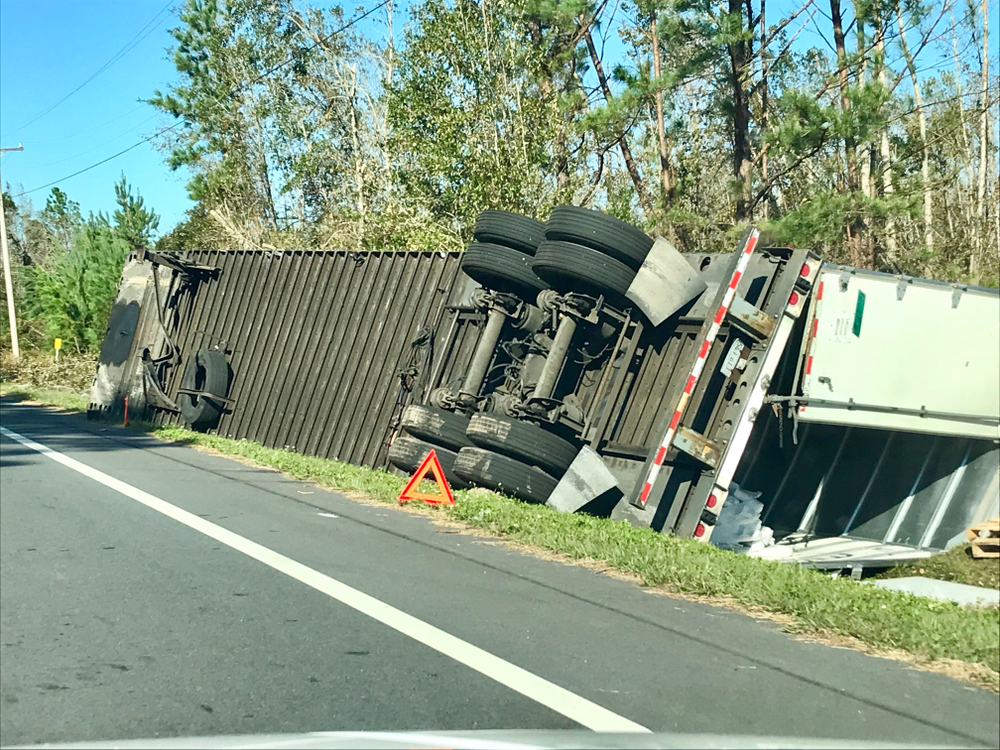
Covered interstate motor carriers and commercial drivers must comply with Federal Motor Carrier Safety Regulations in addition to applicable Oklahoma law. Whether a particular federal rule applies depends on factors including interstate versus intrastate operation, vehicle weight and classification, carrier type, cargo, and applicable exemptions.
For many property-carrying drivers, current hours-of-service rules under 49 CFR § 395.3 include an 11-hour driving limit after 10 consecutive hours off duty, a 14-hour on-duty driving window, and a required 30-minute interruption after 8 cumulative hours of driving without a qualifying break.
Hours-of-service records help determine whether fatigue or excessive driving time actually contributed to the crash.
What Is the Difference Between ELD Records and Vehicle Electronic Data?
An electronic logging device primarily records driver hours-of-service information. FMCSA requires carriers to retain ELD records of duty status and supporting documents for six months under applicable recordkeeping rules. ELD data does not typically vanish within days of a crash.
Vehicle electronic control modules or event-data recorders are different systems. They may contain vehicle-operating information such as speed, braking, and engine data. Availability varies by truck manufacturer, model, system type, later operation, and repair history.
Some electronic vehicle data can change, be overwritten, or become unavailable as the truck is operated, repaired, or returned to service.
Those are two different evidence sources. Treating them as one creates confusion about what records exist and how long they remain available.
Do All Trucking Operations Carry the Same Insurance?
Some regulated motor carriers have federal minimum financial-responsibility requirements that are different from those for ordinary motorists. For certain for-hire interstate property carriers operating vehicles above 10,001 pounds and transporting nonhazardous property, the federal minimum under 49 CFR § 387.9 is generally $750,000. Operations involving certain hazardous materials can require higher minimums.
Higher required coverage does not automatically mean a larger recovery. The available coverage must be investigated in the individual case, and the claim still depends on the strength of the liability and damages evidence.
Who May Be Responsible for a Truck Crash?
A truck crash can involve several potentially responsible parties, but each party’s own conduct and causal role must be established through the evidence. Involvement alone does not create liability.
| Potential Party | What Makes That Party Relevant |
|---|---|
| Driver | Unsafe operation that caused or contributed to the crash |
| Motor carrier | Vicarious liability for an employee driver’s negligence or independently negligent carrier conduct |
| Shipper / loading party | Improper loading or securement under that party’s control |
| Maintenance contractor | Negligent inspection or repair connected to mechanical failure |
| Manufacturer | Defective vehicle or component that caused or contributed to the crash |
| Broker | Negligent carrier selection or other independent broker conduct when supported by state law and the facts |
When Is the Motor Carrier Responsible for the Driver’s Conduct?
A motor carrier may be legally responsible for the negligence of an employee driver acting within the course and scope of employment. That is vicarious liability: the carrier answers for the driver’s conduct because of the employment relationship.
A separate direct-negligence theory focuses on what the carrier itself knew or reasonably should have known. If the carrier hired a driver whose known safety history raised questions about fitness to operate, the carrier’s own conduct is at issue.
Oklahoma treats vicarious liability and direct carrier-negligence theories differently, and the availability of a particular direct claim can depend on the allegations and admissions in the case. Attorney review is required for any specific vicarious-liability or negligent-hiring statement before publication.
When Does Loading or Cargo Matter?
A shipper or loading party is not automatically responsible because its cargo was being transported. Potential responsibility depends on who loaded the cargo, who controlled the loading process, whether the load was improperly secured or distributed, and whether that condition contributed to the crash.
Applicable federal rules require commercial cargo to be secured against shifting or movement during transportation, but the legal question is still whether the violation actually caused or contributed to the collision.
What Evidence Matters in an Oklahoma Truck Crash Claim?
Commercial truck claims can involve carrier-controlled regulatory and operational records that are not typically part of an ordinary passenger-vehicle claim. A semi-truck accident attorney in Oklahoma examines carrier-controlled records alongside the physical crash evidence.
Records that may be relevant include:
- ELD hours-of-service data showing the driver’s recent duty and rest history
- Vehicle electronic data recording speed, braking, or engine information when available
- Driver qualification files, which carriers generally must maintain during employment and for three years after employment ends under federal recordkeeping rules
- Dispatch, trip, and communication records
- Maintenance and inspection records showing whether a known mechanical issue existed before the crash
Each record answers a specific question. Hours-of-service data helps test a fatigue allegation. Maintenance records help show whether a reported problem was addressed. Driver qualification material helps evaluate whether the carrier properly qualified the driver.
Why Does Early Preservation Matter?
Some evidence changes with continued truck operation, repairs, ordinary retention practices, and corporate record cycles. A preservation letter can formally identify relevant evidence and notify the carrier or other parties that preservation is being requested. If evidence is later destroyed after a duty to preserve arose, courts may address spoliation under the applicable legal standards.
Early preservation prevents avoidable uncertainty about what existed immediately after the crash. It does not guarantee a particular sanction or outcome, but it protects against gaps in the record that make the claim harder to prove.
Post-accident drug and alcohol testing records can also be important when testing was required or performed. Fatal crashes trigger testing requirements under 49 CFR § 382.303 without a citation, while certain nonfatal injury or tow-away crashes require a qualifying citation within the regulatory timeframe.
Call 918-246-0200 for a free case evaluation to discuss what records may exist and what preservation steps the situation requires.
How Can an FMCSA Violation Affect an Accident Claim?
A verified safety violation can become important evidence when the violated rule was applicable and the violation actually contributed to the crash or injury. Federal Motor Carrier Safety Regulations cover areas including hours of service, vehicle maintenance and inspection, driver qualifications, and cargo securement.
A violation by itself does not automatically establish civil liability. The injured person still needs evidence connecting the specific regulatory failure to the collision. An hours-of-service violation matters when fatigue from excessive driving time contributed to the crash. A maintenance violation matters when an uninspected or unrepaired mechanical problem caused a failure during operation.
When we evaluate how an FMCSA violation can affect an accident claim, we examine whether the rule applied to the carrier and driver, whether the violation is documented, and whether a causal link to the crash exists.
What Types of Truck Crashes Create Specific Evidence Questions?
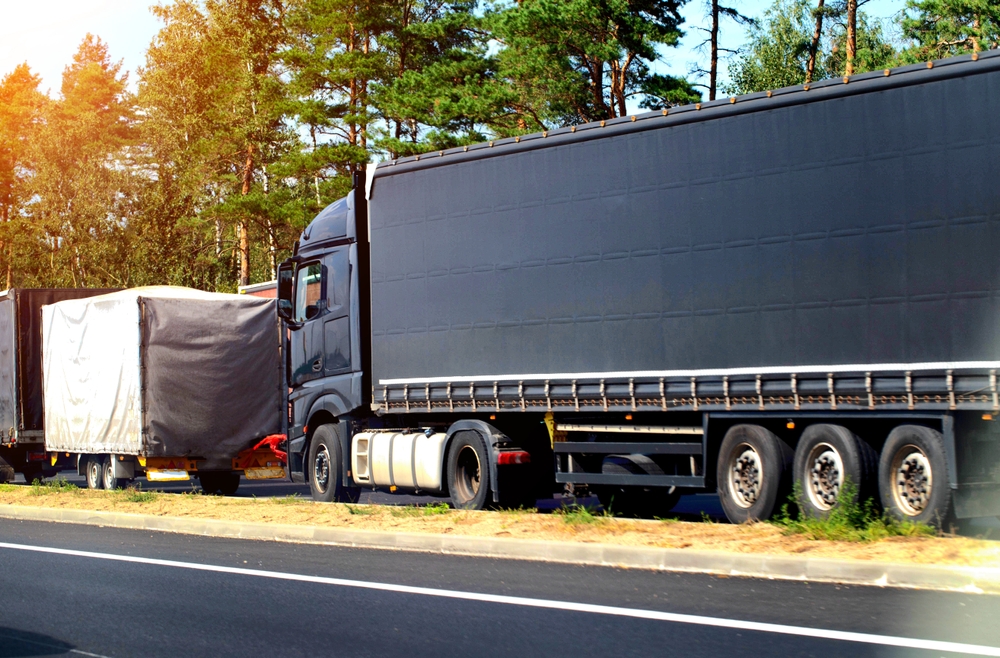 Each crash mechanism points investigators toward different evidence and potentially different responsible parties. An 18-wheeler crash lawyer examines the specific sequence rather than applying the same analysis to every collision.
Underride Collisions
An underride collision occurs when part of a smaller vehicle travels beneath part of a larger truck or trailer. Federal rear-impact-guard requirements under 49 CFR § 393.86 apply to covered trailers and semitrailers, subject to scope and exceptions. The investigation examines guard compliance, vehicle positions, speeds, and visibility.
Jackknife Events
A jackknife occurs when the tractor and trailer fold toward each other. The analysis may involve braking inputs, road conditions, speed, equipment condition, cargo weight and distribution, and driver response. A jackknife does not automatically prove excessive speed or driver negligence.
Wide-Turn and Blind-Spot Collisions
Large commercial vehicles require more space to turn and have areas around them that are more difficult for the driver to observe. The legal question is whether the driver used reasonable care under the actual circumstances. Evidence includes the truck’s path, lane position, mirror use, signals, surrounding traffic, and available video.
Cargo Shift and Tire Failure
Cargo movement can implicate loading, securement, and the parties who controlled those processes. A tire failure can involve maintenance, inspection practices, loading, road conditions, or a tire defect. Neither scenario automatically assigns liability to one party.
What Steps Help Protect a Truck Crash Claim?
The actions taken after a truck collision affect the evidence available later. Several practical steps help protect the claim without requiring the injured person to conduct their own investigation.
Useful steps include:
- Identifying the trucking company name, USDOT number on the cab, and license plate numbers for both the truck and trailer when safely possible
- Photographing vehicle damage, the scene, road conditions, and any visible markings or debris
- Collecting witness names and contact information before leaving the scene
- Seeking medical evaluation appropriate to the injuries rather than assuming the full extent is immediately apparent
- Preserving the damaged vehicle, clothing, and other physical evidence
An injured person does not need to gather every record before contacting an attorney. The carrier controls most of the regulatory and operational records. We identify what exists and take steps to preserve it.
What About Contact From the Carrier’s Insurer?
The motor carrier’s insurer may contact the injured person early in the process. Statements about speed, distance, fault, the sequence of events, or the extent of injuries can affect how the insurer evaluates the claim.
The practical concern is accuracy. Do not estimate facts you do not actually know. Do not sign releases or settlement documents without understanding their effect. The insurer’s early evaluation reflects its own position on the claim, not a final determination of what happened or what the claim involves.
What Damages Does an Oklahoma Truck Crash Claim Address?
Truck collisions can produce injuries ranging from fractures and soft-tissue damage to permanent impairment, depending on the forces involved. The damages portion of the claim accounts for the losses the medical and functional evidence supports.
Damages in a truck crash claim, when supported by the evidence, may include:
- Emergency and follow-up medical treatment
- Future medical care and rehabilitation when medically supported
- Lost income from missed work
- Reduced earning capacity when permanent limitations affect future employment
- Physical pain and impairment
- Property damage
Truck crashes on Oklahoma highways and interstates often involve higher speeds and heavier vehicles, which can affect both the severity of injuries and the complexity of the crash investigation.
Under 23 O.S. § 13 and § 14, an injured person’s negligence can reduce recovery proportionally and can bar recovery when it exceeds the combined negligence of the responsible parties.
A Tulsa truck accident lawyer at Lloyd & Lloyd applies the same investigative approach to truck claims throughout the Tulsa metro area.
FAQs for Oklahoma Truck Accident Claims
Does the truck driver have to receive a traffic ticket for a crash claim to exist?
No. A citation is one form of evidence, but civil liability does not depend on whether the responding officer issued a ticket. The civil claim examines the complete evidence of each party’s conduct and its connection to the collision.
What if the carrier name on the cab differs from the company listed on the USDOT authority?
Leasing arrangements, intermodal operations, and brokered loads can create situations where the vehicle’s owner, the operating carrier, and the entity whose authority covers the shipment are different companies. Identifying which entity controlled the driver, the vehicle, and the operation at the time of the crash is one of the first investigative steps.
Can a smaller delivery or box truck involve different regulatory rules than an 18-wheeler?
Yes. Federal Motor Carrier Safety Regulations apply based on factors such as vehicle weight, interstate operation, carrier type, and cargo rather than vehicle appearance alone. A lighter commercial vehicle operating intrastate may face different federal requirements than a heavy interstate tractor-trailer.
What is the filing deadline for an Oklahoma truck accident claim?
Most ordinary negligence claims involving personal injury fall under the two-year period in 12 O.S. § 95(A)(3). The two-year period usually begins when the injury occurs. Claims involving government entities or other special circumstances can involve different timing rules.
What happens when another passenger vehicle also contributed to the truck collision?
Oklahoma’s comparative-negligence framework compares the injured person’s own negligence against the combined negligence of the responsible parties. If the injured person’s share does not exceed the combined share of those who caused the harm, recovery remains available but is reduced proportionally.
What if the truck was repaired or returned to service before an attorney was involved?
Repairs can eliminate physical evidence of the vehicle’s condition at the time of the crash. Photographs, pre-repair inspection reports, maintenance invoices, parts removed during service, and insurance documentation may help reconstruct the mechanical condition. Early attorney involvement helps identify and preserve those records before they become unavailable.
When a Truck Crash Raises Questions Beyond an Ordinary Collision
A commercial truck claim involves federal regulations, carrier-controlled records, and a corporate structure that ordinary car-crash claims do not. At Lloyd & Lloyd, we investigate the driver’s conduct, the carrier’s operations, the available electronic and regulatory records, and the specific evidence each crash mechanism produces.
Our office is in Sand Springs, Oklahoma. We represent people with truck-crash injuries throughout the Tulsa area. Call 918-246-0200 for a free case evaluation to discuss what happened, what records may exist, and what the evidence shows about who was responsible.
GET THE EXPERIENCE YOU NEED FOR YOUR CASE
If you have been injured due to the fault of others, contact Lloyd & Lloyd. Our record of success in the courtroom and in the courts of appeal, combined with our commitment to giving personal service, enable us to provide exceptional legal representation. You can fill out an online case review form by clicking here, or by calling us at (918) 246-0200.