Tulsa T-Bone (Side-Impact) Collision Lawyer
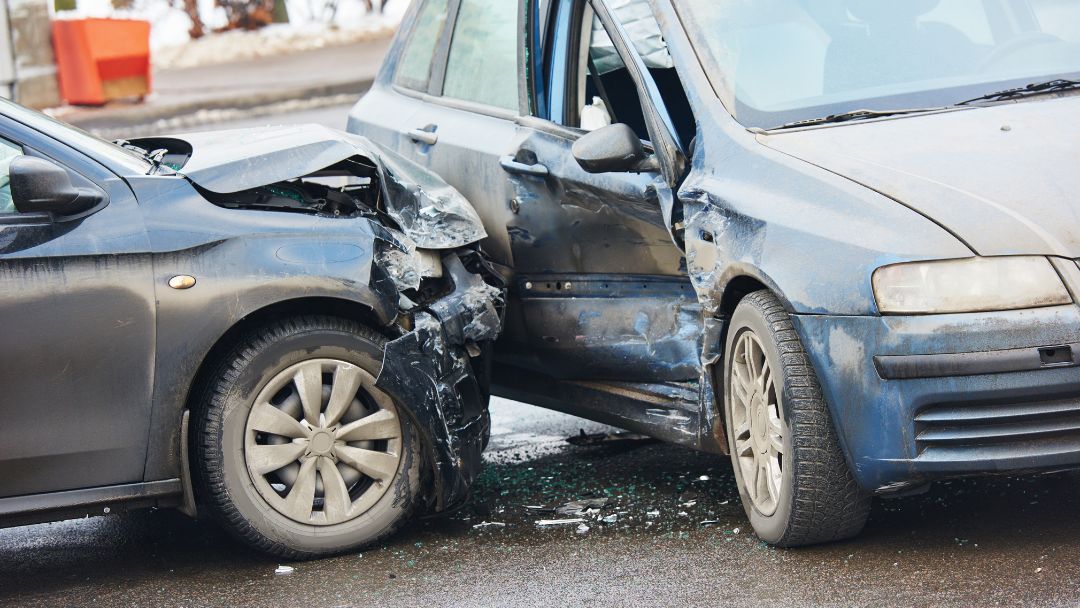
If you need a Tulsa t-bone accident lawyer after a disputed intersection crash, we start by determining who had the right-of-way and what evidence proves it. T-bone crashes happen when two vehicles enter the same intersection space at the same time, and the central question is who had the right-of-way and whether either driver’s conduct contributed to the collision.
At Lloyd & Lloyd, we represent people who have been injured in side-impact collisions throughout the Tulsa area from our office in Sand Springs. As side-impact collision lawyers, we review the traffic rules, the physical evidence, and the competing accounts to determine how the crash happened and who bears responsibility.
If you were hit in an intersection crash and the other driver disputes fault, call 918-246-0200 for a free case evaluation.
Who Is at Fault in a T-Bone Accident?
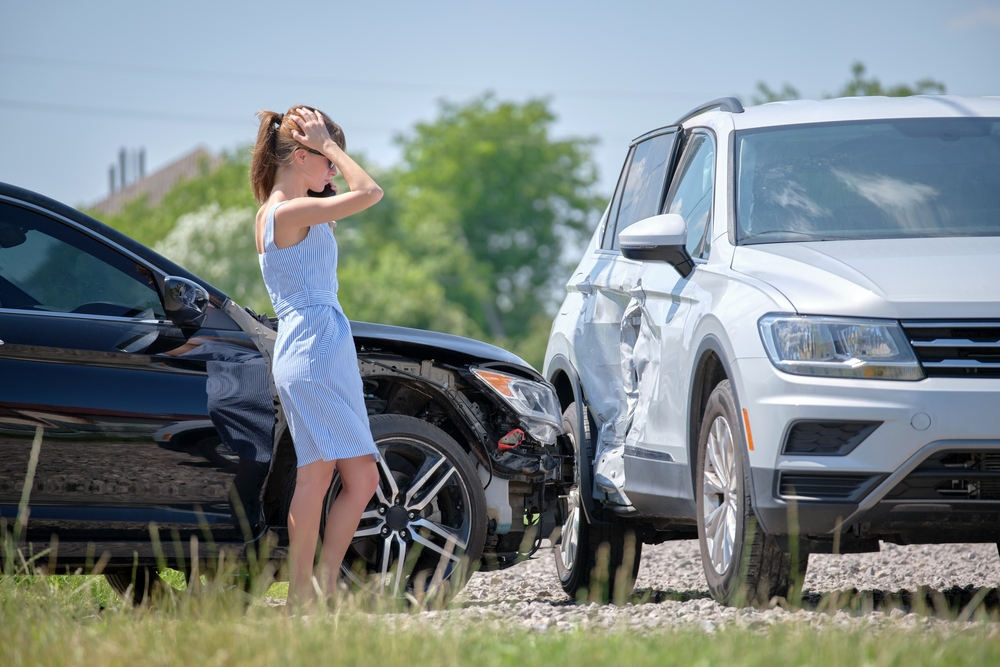
Fault in a t-bone accident depends on which driver violated the right-of-way rules that controlled the intersection. The physical orientation of the vehicles does not answer that question by itself.
A driver whose vehicle was struck on the side is not automatically the one who had the right-of-way. A vehicle struck broadside may have entered the intersection against a red light, pulled from a stop sign into oncoming traffic, or turned left across an oncoming vehicle’s path.
Likewise, a driver who strikes the side of another vehicle is not automatically at fault. The evidence determines who entered the intersection lawfully and who created the collision.
That evidence includes the traffic signal or sign each driver faced, the timing and speed of each vehicle’s entry, the point of impact on the vehicles, and any available video or witness accounts. When the drivers tell different stories, the physical record of the crash becomes the most important part of the investigation.
What If Both Drivers Say They Had a Green Light?
When both drivers claim a green light, fault has to be reconstructed from evidence outside their competing statements. This is one of the situations where outside evidence becomes especially important.
When drivers approaching from conflicting cross streets both claim a green light, signal-phase evidence helps determine which account fits the intersection controls. Traffic signals operate through programmed phases, and signal timing or phase information helps reconstruct which movements were permitted before the crash.
In an unprotected left-turn crash, however, opposing drivers can both face green signals. The turning driver still must yield to approaching traffic under Oklahoma law. That means both accounts may be truthful while one driver still violated the right-of-way.
Evidence that helps resolve a disputed-light claim includes:
- Available traffic-camera or intersection-camera footage, when the > equipment records and retains video
- Dashcam recordings from either vehicle or nearby drivers
- Nearby business or residential surveillance footage
- Independent witness accounts from pedestrians, other drivers, or > bystanders
- Signal timing or phase information, when available from the traffic > authority
- Vehicle positions, debris patterns, and the point of impact
Identifying likely video sources quickly matters. Some surveillance systems overwrite footage, so locating and requesting preservation of available recordings early helps protect the evidence before it disappears.
Call 918-246-0200 if you are dealing with a disputed-fault intersection crash and need help identifying what evidence exists.
What Do Oklahoma’s Red-Light and Stop-Sign Rules Require?
Oklahoma’s traffic-signal and stop-sign statutes establish the right-of-way rules that control most T-bone collisions. These rules determine what each driver was legally required to do before entering the intersection.
What If a Driver Ran a Red Light and Hit Me in Oklahoma?
A driver facing a steady red signal must stop before entering the intersection and remain stopped until the signal permits the driver to proceed. 47 O.S. § 11-202 states that requirement directly.
The same statute also requires a driver proceeding on green to yield to vehicles and pedestrians already lawfully in the intersection. A green light does not give a driver the unconditional right to proceed without regard to cross traffic that entered lawfully.
Violating an applicable traffic-safety law, such as the red-light rule, establishes negligence when the law was meant to protect against that type of crash and the violation caused the injury. The injured person still has to connect the violation to the collision and the resulting losses.
What Happens When a Driver Runs a Stop Sign?
A driver approaching a stop sign must stop and then yield to traffic that is already in the intersection or approaching closely enough to create a collision risk. 47 O.S. § 11-403 states that rule.
A complete stop alone does not give the stopped driver the right to proceed. In practical terms, the stopped driver has to wait when another vehicle is close enough that entering the intersection would create a collision risk. That distinction matters because a driver who says “I stopped first” may still have entered unsafely.
Who Is at Fault in a Left-Turn Accident in Oklahoma?
A left-turning driver must yield to oncoming traffic that is close enough to make the turn unsafe. 47 O.S. § 11-402 states that the driver intending to turn left must yield when an approaching vehicle presents an immediate hazard.
Left-turn T-bone crashes produce some of the sharpest fault disputes. The turning driver may say the oncoming vehicle was speeding or too far away when the turn began. The oncoming driver may say the turn happened directly in their path with no time to stop.
Timing and distance evidence becomes especially important in these cases. The point of impact on the vehicles, the position of each vehicle in the intersection, available video, and witness accounts all help reconstruct whether the turning driver had enough space to complete the turn safely.
When the evidence shows the oncoming driver also contributed, both drivers’ conduct factors into the fault analysis. An oncoming driver who sees the turn begin but looks away and fails to brake despite having time to react may share responsibility for the collision.
How Does Vehicle Damage Help Establish Fault in a T-Bone Crash?
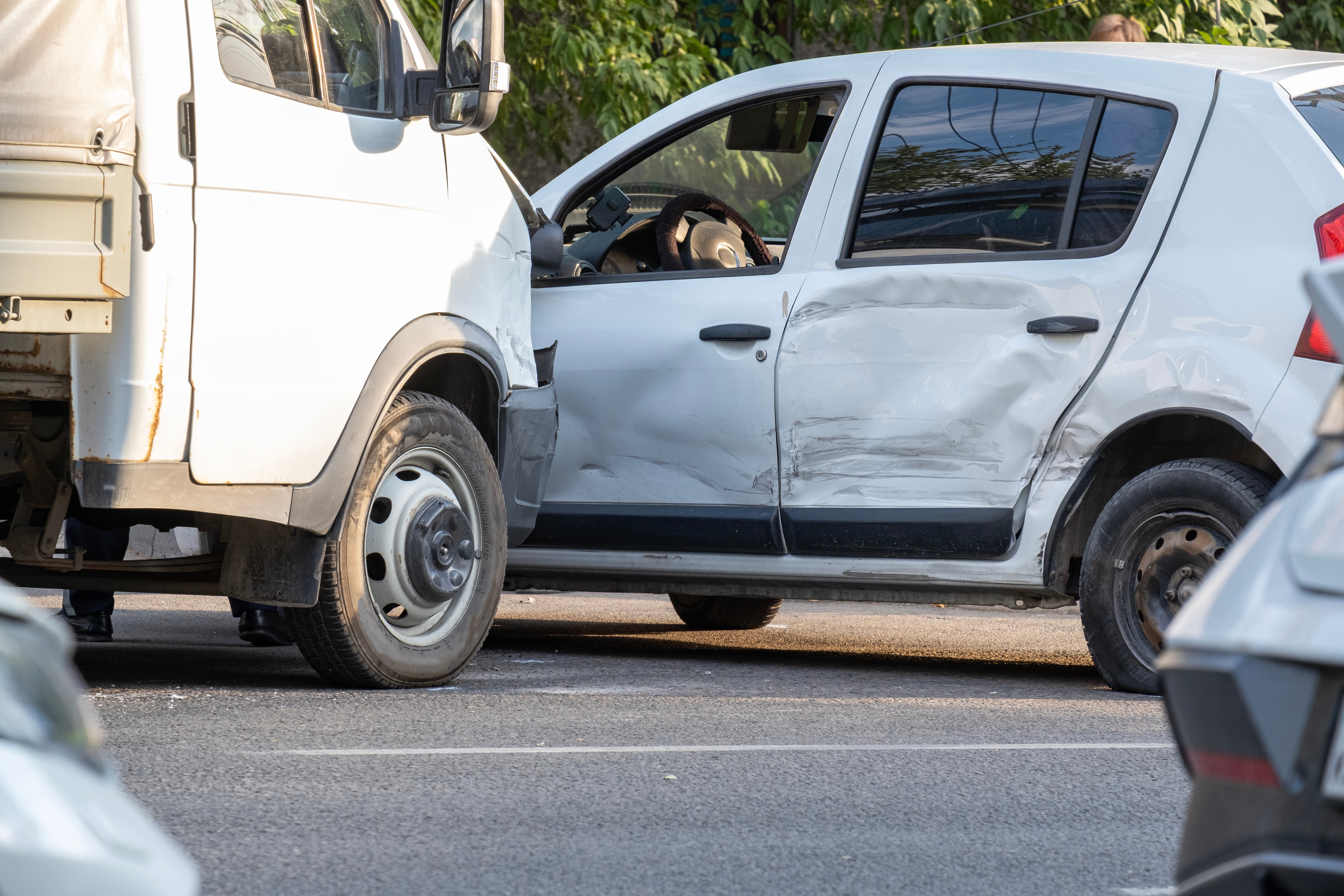
Vehicle damage shows the angle of impact and how the vehicles moved into the collision, but damage alone does not decide who had the right-of-way. The damage pattern is one piece of evidence that gets compared with the traffic rules, witness accounts, and other physical proof.
Useful questions the damage evidence answers include:
- Where did the vehicles first make contact, and does that point match > one driver’s version of events?
- Was the damage concentrated on a front door, rear door, or quarter > panel, and what does that indicate about the angle of approach?
- Which direction did each vehicle travel after impact, and do the > final positions match one account over the other?
- Do debris and tire marks on the roadway support or contradict the > stated sequence of events?
The damage pattern works best when combined with other evidence. A vehicle struck on the driver’s side rear door tells a different story than one struck on the front passenger door.
We compare the damage with the intersection layout, traffic rules, and available video to build the clearest picture of the collision sequence.
T-bone crashes turn on competing accounts of the few seconds before impact. Different types of evidence answer different parts of that dispute.
| What the drivers disagree about | Evidence that helps answer it |
|---|---|
| “I had the green light.” | Available video, independent witnesses, signal timing information |
| “I stopped before entering.” | Witnesses, video, vehicle movement, crash location |
| “The other car was speeding.” | Vehicle data when available, video, distance and timing analysis |
| “I had enough time to make the left turn.” | Sight distance, timing, impact location, witness and video evidence |
| “The other vehicle entered my lane.” | Vehicle damage, debris, final positions, roadway evidence |
Why Are Side-Impact Crash Injuries Different?
The side of a passenger vehicle provides less crush space between the occupant and the striking vehicle than the front of the vehicle provides in a frontal crash. That structural difference is why side impacts create different injury risks from head-on collisions.
In a frontal crash, the engine compartment and front structure absorb energy before the force reaches the occupant. In a side impact, the occupant sits closer to the point of contact with less structure in between.
Side airbags and curtain airbags reduce injury risk by cushioning occupants from the vehicle’s side structure and the striking vehicle. IIHS research explains that these airbags protect the head and chest and must deploy extremely quickly because of the limited space available.
Those safety features help, but they do not eliminate the risk created by severe intrusion into the passenger compartment. IIHS testing has shown that occupant-compartment structure remains important even when airbags are present.
The medical records, diagnostic imaging, and treatment history document the actual injuries from a specific crash. We do not diagnose injuries based on crash type. We use the medical evidence to connect what happened in the collision to the treatment the injured person received.
How Does Shared Fault Affect a T-Bone Claim?
When both drivers contributed to an intersection crash, Oklahoma’s comparative negligence rule determines how the injured person’s share of fault affects recovery. Under 23 O.S. § 13, recovery is barred when the injured person’s negligence exceeds the combined negligence of the defendants.
At 50% fault, the injured person still recovers, but the award is reduced by half. At 51%, recovery is barred entirely.
Shared fault comes up regularly in T-bone cases. One driver begins an unprotected left turn. The oncoming driver sees the turn begin but looks away and fails to brake despite having time to react. Both drivers contributed to the collision.
The percentage each driver bears depends on the evidence of timing, speed, sight distance, and right-of-way. We analyze the full sequence of events rather than accepting one driver’s version at face value.
When Is a Lawyer Useful After a Disputed T-Bone Crash?

A lawyer becomes especially useful when the drivers disagree about the signal, right-of-way, speed, or sequence of events. Those disputes define most T-bone claims, and they require evidence that goes beyond the police report.
We identify available video and witnesses, obtain relevant records, analyze the applicable Oklahoma traffic rules, review vehicle and roadway evidence, address comparative-fault arguments, and document the injury-related losses.
A Tulsa car accident lawyer compares the drivers’ accounts with the traffic rules, video, witness statements, and physical evidence before fault is reduced to one person’s word against another’s.
Video and witness evidence become harder to obtain as time passes. Identifying likely sources early gives the investigation a better factual record. Call Lloyd & Lloyd at 918-246-0200 to discuss what evidence may be available in your case.
FAQs for Tulsa T-Bone Collision Claims
What if the other driver changes their story after the crash?
A claim relies on video, witnesses, physical evidence, prior recorded statements, and other records rather than either driver’s latest version. A driver’s initial statement to police, recorded 911 call, or statement to an insurer creates a record that later changes do not erase.
Does the police report decide who had the right-of-way?
No. A police report documents the officer’s observations and the information the drivers and witnesses provided. It is useful evidence, but civil liability depends on the full factual record and applicable law. The report does not bind a court or an insurance company evaluating the claim.
Does a traffic citation decide who is responsible for the T-bone crash?
No. A citation identifies the traffic rule the officer believed was violated, but civil liability depends on the full evidence and applicable law. A citation is an accusation, not a final determination of fault for the purposes of an injury claim.
Can a passenger make a claim after a T-bone collision?
Yes. An injured passenger may pursue a claim against the driver or drivers whose negligence caused the crash. The passenger does not need to resolve the drivers’ dispute before seeking legal advice.
What if the light turned yellow while I was already in the intersection?
Oklahoma’s signal statute under 47 O.S. § 11-202 treats a yellow signal as a warning that green is ending. Fault depends on when each vehicle entered the intersection, what signal each driver faced, and whether either driver violated another right-of-way rule.
What if a T-bone crash happens in a parking lot instead of a public intersection?
Traffic-control statutes do not apply to private property in exactly the same way, but drivers still owe reasonable care. Video, right-of-way markings, vehicle movement, witnesses, and parking-lot design all become important evidence in establishing fault.
Get the Right-of-Way Question Answered
The question after a property injury is not simply whether you fell or were hurt. It is what made the property dangerous, who controlled it, and what they knew before the injury happened. We review those facts during a free case evaluation and explain whether the evidence supports a claim.
Call 918-246-0200 to discuss what caused your injury, who controlled the property, and what evidence may show the responsible party knew or had reason to know about the danger.