

Tulsa Burn Injury Lawyer
A burn injury raises legal questions that go beyond the size of the wound. The depth of the burn, the part of the body it covers, and the source of the fire, explosion, or thermal exposure each shape the claim differently. A Tulsa burn injury lawyer at Lloyd & Lloyd investigates what caused the burn and who controlled the source of danger.
We represent people with serious injuries throughout the Tulsa area from our office in Sand Springs, Oklahoma. If you or a family member are dealing with a burn that required grafting, left lasting scars, or restricted movement, call 918-246-0200 for a free case evaluation.
How Are Burns Classified by Depth?
Burn severity starts with how deep the damage extends into the skin and underlying tissue. Most people search using first-, second-, third-, and fourth-degree terminology. Those terms remain widely recognized, but modern burn medicine more often describes injuries by tissue depth.
| Common Term | Modern Depth | Tissue Involved | Possible Long-Term Concern |
|---|---|---|---|
| First degree | Superficial | Epidermis | Usually limited-lasting skin damage |
| Second degree | Partial thickness | Epidermis + part of dermis | Scarring risk varies with depth |
| Third degree | Full thickness | Entire skin thickness | Grafting, scarring, contracture, reconstruction may become relevant |
| Fourth degree | Extends beyond skin | Deeper soft tissue, potentially muscle or bone | Major functional loss and extensive reconstruction may occur |
One common misconception is that deeper burns always produce more pain. Deep full-thickness burns damage nerve endings and may have reduced sensation within the burned area itself. Pain still arises from surrounding tissue, graft sites, and procedures.
Why Does Burn Location Matter as Much as Size?
Total body surface area, or TBSA, estimates how much of the body has partial-thickness or full-thickness burn injury. The American Burn Association does not count superficial burns in TBSA calculations.
TBSA is medically important, but it is not the only measure of seriousness. The ABA recommends immediate burn-center consultation with consideration for transfer for deep partial- or full-thickness burns involving the face, hands, feet, genitalia, perineum, and major joints. That recommendation applies even when the overall TBSA is relatively small.
A deep burn covering three percent of the body sounds minor in percentage terms. If that three percent covers both hands, the functional consequences affect nearly every daily task. A facial burn creates significant disfigurement concerns even when the total surface area is limited.
When you speak with a burn injury attorney in Oklahoma at Lloyd & Lloyd, we evaluate the burn’s depth, TBSA, and location together to assess the losses that must be documented.
How Do Scarring and Contractures Affect a Burn Claim?
 A burn scar is not simply a cosmetic concern. Depending on location and severity, scarring can restrict movement, limit joint range of motion, and interfere with hand function, neck mobility, and routine activities. Burn contractures can produce functional limitations and sometimes require later reconstructive treatment.
Oklahoma’s personal-injury jury instructions identify disfigurement as its own compensable element, separate from physical pain and mental anguish. That distinction matters because a burn scar affects the claim through several different paths:
- Appearance and visibility of the scar on exposed areas of the body
- Location on a joint, hand, or the face where scarring restricts function or is highly visible
- Permanence and whether future treatment is expected to improve the condition
- Functional restriction limiting movement, grip, or daily tasks
- Psychological and social consequences when supported by medical documentation
Burn rehabilitation literature recognizes psychological recovery as part of long-term burn care. Visible scarring and disfigurement may carry psychological effects that form part of the claim when documented through the appropriate medical evidence.
What Caused the Burn, and Who Controlled That Risk?
The legal question in a burn case is not just what happened. It is who had control over the source of danger and whether that party’s conduct or product caused the injury. Each burn mechanism points toward different defendants and different legal theories.
Vehicle Fires and Defective Products
A fire after a vehicle crash raises questions about what started the blaze. Another driver’s negligence may have caused the collision. A separate question is whether a vehicle component allegedly failed and contributed to the fire.
In Kirkland v. General Motors Corp., the Oklahoma Supreme Court held that a products-liability plaintiff must prove the product caused the injury, the defect existed when it left the defendant’s possession, and the defect made the product unreasonably dangerous.
That rule applies to any product alleged to have caused a burn, including appliances, batteries, fuel systems, propane equipment, and heating devices.
Structure Fires and Property Conditions
When a fire starts in a residential rental property, the question is who controlled the condition that caused it. For residential rental property, 41 O.S. § 118 requires Oklahoma landlords to keep dwelling premises fit and habitable. That includes maintaining supplied electrical, plumbing, heating, ventilation, and air-conditioning systems in safe working order.
Commercial-property liability depends on different facts, including the lease terms, the parties’ respective control over the premises, and who maintained the system or condition that allegedly caused the fire.
Oklahoma courts have also recognized duties for portions of property that a landlord retains under its control. A Tulsa premises liability lawyer investigates whether a known wiring defect, unrepaired furnace, faulty gas line, or other dangerous condition caused the fire. Not every structure fire creates landlord liability. The evidence must connect the condition to the cause.
Electrical Burns
The visible skin injury from an electrical burn may underestimate the total damage. Electrical current can cause deeper tissue damage even when the external burn appears limited.
An electrical burn injury lawsuit requires evidence identifying the source of the current and the party responsible for it. That may be a property owner, contractor, equipment manufacturer, or another party, depending on the facts.
Scald Burns, Chemical Burns, and Gas Explosions
A scald burn claim in Oklahoma involves hot liquids or steam, but the legal theory depends on why the exposure happened. Possible contexts include excessively hot water tied to a property condition, commercial negligence, defective equipment, or another person’s negligent handling.
Chemical burns turn on what substance caused the injury, who controlled it, and whether warnings, storage, or handling were adequate.
Propane and gas explosion cases may require tracing the gas source, installation, maintenance, valves, and storage. The key question is what failed and who had legal responsibility for the failure.
If a burn occurs while someone is working, a separate third-party injury claim may exist when evidence shows that a company, property owner, contractor, or product manufacturer other than the employer caused the injury.
Call 918-246-0200 for a free case evaluation to discuss what caused the burn and what evidence identifies the responsible party.
What Does Long-Term Burn Treatment Involve?
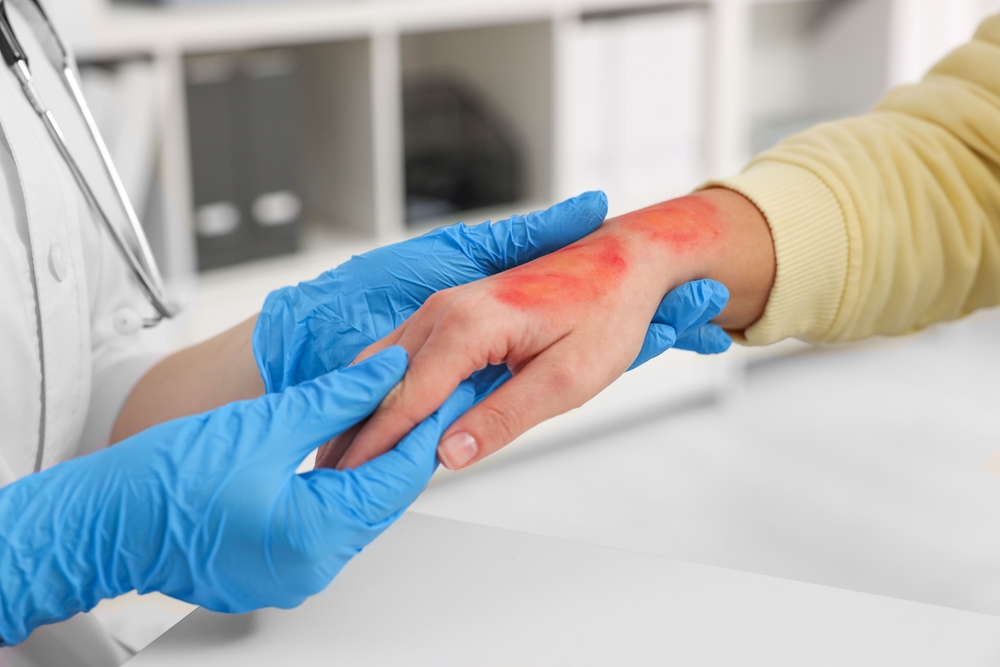
Deep burns and burns requiring grafting can create treatment timelines that extend well beyond initial wound closure. Care often continues long after the acute injury has healed.
Full-thickness burns frequently require surgical management, and grafting is a common part of treatment. Deep partial-thickness injuries may also require surgery depending on the wound.
Future treatment needs vary by person and injury, but evidence-supported possibilities include:
- Scar-release or reconstructive procedures when contractures continue to restrict function or appearance
- Physical or occupational therapy addressing range of motion and strength
- Scar management, including pressure garments or other medically recommended approaches
- Revision procedures when function or appearance remains impaired after initial treatment
Some people require later reconstructive procedures when scarring, contractures, or other burn consequences persist. The number and timing of those procedures are individual medical questions. When you work with a fire injury lawyer in Tulsa at Lloyd & Lloyd, we document what future treatment the medical evidence supports and what those costs represent within the claim.
What Damages Does a Burn Injury Claim Include?
Burn claims raise damage questions that reach well beyond the initial hospital stay. Our personal injury law glossary defines many of the legal terms that arise in injury claims, including several relevant to burn cases.
Recoverable damages in a burn claim, when supported by the evidence, include:
- Past and future physical pain
- Past and future mental pain
- Disfigurement as a separate category from pain
- Permanence and physical impairment
- Lost earnings and impairment of future earning capacity
- Necessary past and future medical care, treatment, and rehabilitation
Each category requires its own supporting evidence. Burn claims often need documentation from surgical records, rehabilitation providers, vocational evidence, and long-term treatment plans.
Why Is Disfigurement a Separate Damages Category?
Disfigurement addresses the visible, lasting change to a person’s appearance. It is distinct from physical pain, mental anguish, and functional impairment. A burn scar’s relevance depends on its size, location, visibility, permanence, and any functional restriction it creates.
For injuries occurring on or after September 1, 2025, 23 O.S. § 61.3 governs Oklahoma’s noneconomic-damages framework and specifically addresses disfigurement. The statute provides different treatment where a factfinder makes a qualifying finding of permanent and severe physical injury, including substantial disfigurement.
How Does a Burn Affect Earning Capacity?
A burn that restricts hand function, limits joint mobility, or creates appearance-related barriers in the workplace may reduce the person’s ability to earn income over time. Lost earning capacity addresses a different question than lost wages.
Lost wages represent income already missed because of the injury. Lost earning capacity asks whether lasting, documented limitations reduce future earning ability. Evidence connecting the burn to actual vocational restrictions supports this part of the claim.
A Tulsa catastrophic injury lawyer evaluates lifetime losses when permanent burns affect function, appearance, or long-term care needs.
How Long Do You Have to File a Burn Injury Claim in Oklahoma?
Most ordinary Oklahoma negligence claims involving personal injury fall under the two-year period in 12 O.S. § 95(A)(3). The two-year period usually begins when the injury occurs.
Claims involving government entities, minors, or other special circumstances can involve different timing rules. Understanding which deadline applies is one reason to talk with an attorney early in the process.
FAQs for Tulsa Burn Injury Claims
What evidence helps identify what caused a fire or explosion?
Fire-origin evidence may include fire-investigation reports, witness statements, photographs, product-recall records, maintenance logs, building-inspection records, and physical evidence preserved from the scene. Early investigation matters because fire scenes change quickly once cleanup or demolition begins.
Does a burn have to require skin grafting before I have an injury claim?
No. Grafting is one indicator of severity, but it is not a prerequisite. A partial-thickness burn that causes lasting scarring, functional restriction, or disfigurement may support a claim without surgical intervention.
What if investigators have not yet determined the exact ignition source?
An undetermined origin does not automatically end a claim. Independent fire-origin investigation, product analysis, maintenance records, and engineering evaluation may identify the cause when the initial investigation remains inconclusive.
Can a burn claim include medically documented smoke-inhalation injuries from the same fire?
Yes. Smoke-inhalation injuries that occur in the same incident and result from the same negligent conduct or defective product are part of the same claim. Medical records documenting the inhalation injury and its effects support that portion of the damages.
What if photographs do not show how serious the burn later became?
Early photographs capture the wound at one point in time. Burn injuries evolve as treatment continues, scarring develops, and contractures form. Later medical records, surgical documentation, therapy notes, and updated photographs help document the injury’s full progression.
Does wearing protective equipment prevent a burn injury claim?
No. The central question is whether another party’s wrongful conduct caused the injury. Protective equipment and the injured person’s own conduct are factual issues that may affect the analysis, but they do not automatically bar a claim.
When a Burn Injury Changes What Comes Next
A serious burn raises questions about medical treatment, scarring, function, and financial recovery that extend far beyond the initial wound. At Lloyd & Lloyd, we review the medical evidence, identify the responsible parties, and document the losses the burn created.
We represent people with burn injuries throughout the Tulsa area from our office in Sand Springs, Oklahoma. Call 918-246-0200 for a free case evaluation to discuss what happened, what treatment lies ahead, and what evidence supports the claim.
GET THE EXPERIENCE YOU NEED FOR YOUR CASE
If you have been injured due to the fault of others, contact Lloyd & Lloyd. Our record of success in the courtroom and in the courts of appeal, combined with our commitment to giving personal service, enable us to provide exceptional legal representation. You can fill out an online case review form by clicking here, or by calling us at (918) 246-0200.