
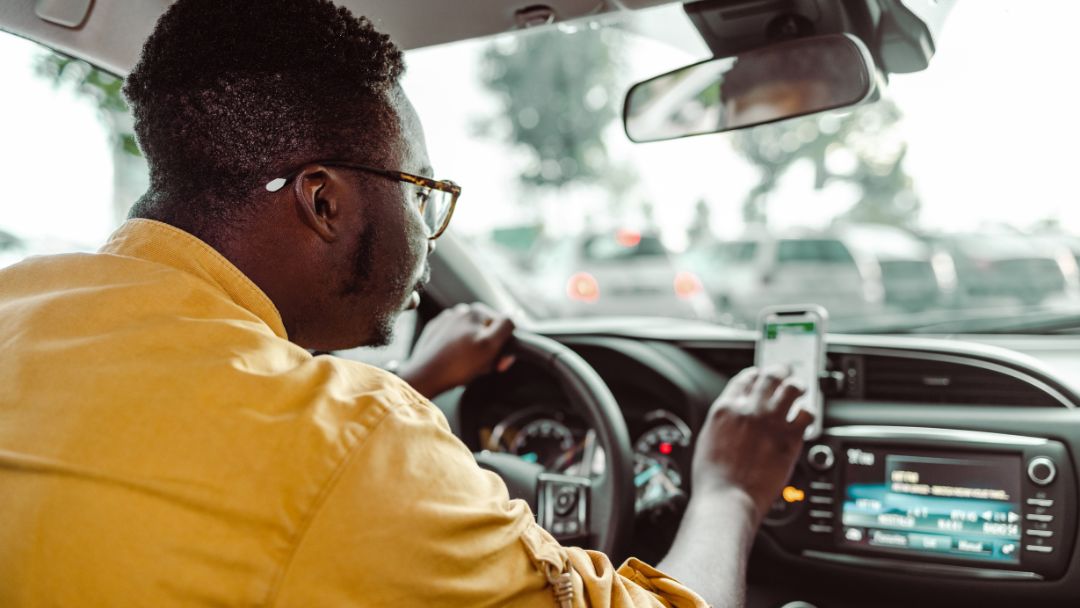
A typical car accident in Oklahoma is usually a straightforward matter between two drivers and their respective insurance companies. When an Uber or Lyft is involved, the legal landscape shifts instantly.
A rideshare accident involves a complex web of three distinct parties: the driver, the tech giant (the Transportation Network Company), and potentially a third-party motorist. Most importantly, the insurance coverage available to you changes second-by-second based on the “App Status” of the driver. If the app was in the wrong mode at the moment of impact, you could be left fighting for coverage that isn’t there.
Understanding the “Three Phases of Coverage”
In Oklahoma, the liability coverage for a rideshare vehicle is dictated by what the driver was doing on their phone. This is the most critical factor in your case:
-
Phase 1: The App is Off. If the driver is using their vehicle for personal errands or commuting, they are treated as a private citizen. Their personal Oklahoma auto insurance policy applies.
-
Phase 2: App is On, Waiting for a Fare. If the driver is “Available” but hasn’t accepted a trip yet, Uber and Lyft provide contingent liability coverage. This typically includes limits of $50,000 for bodily injury per person, $100,000 per accident, and $25,000 for property damage.
-
Phase 3: Ride in Progress. From the moment a driver accepts a ride request until the passenger is safely dropped off, a $1 Million Liability Policy typically kicks in. This covers passengers, other drivers, and pedestrians.
The Lloyd & Lloyd Advantage: We don’t just take the tech company’s word for it. Our team investigates digital logs, GPS data, and app timestamps to prove exactly which phase the driver was in at the moment of impact, ensuring you have access to the maximum compensation possible.
Common Scenarios We Handle
Whether you were in the vehicle or hit by one, our firm has the experience to handle every variation of a rideshare claim:
-
The Passenger: You were a fare-paying passenger in the back seat. Under the “Passenger Bill of Rights,” you are a neutral third party entitled to a safe ride. You should never be held liable for a collision between your driver and another vehicle.
-
The Other Driver: You were hit by an Uber or Lyft driver who was distracted by their navigation app or searching for a passenger.
-
The Pedestrian or Cyclist: High-impact injuries are common in busy areas like the Tulsa Arts District, Jenks, or the Blue Dome District. These cases often involve severe injuries that require the full extent of a $1 million policy.
The “Sand Springs” Advantage: Why Local Representation Matters
In 2026, navigating Oklahoma’s updated Transportation Network Company (TNC) statutes requires a lawyer who understands the local landscape.
-
Evidence Preservation: Getting a “Digital Footprint” (trip logs and GPS pings) is far more difficult than getting a standard police report. We know how to issue spoliation letters to prevent Uber or Lyft from deleting critical data.
-
Local Knowledge: We know the high-traffic corridors where these accidents happen—from the heavy congestion on I-44 and the Creek Turnpike to the narrow streets of Sand Springs and Highway 97. We speak the language of local juries and adjusters.
Step-by-Step: What to Do After a Tulsa Rideshare Wreck
-
Screenshot the App: If you are a passenger, capture the ride details, driver’s name, and “Trip ID” immediately. This is your primary proof of Phase 3 coverage.
-
Report to the Platform: Use the “Safety” or “I was in an accident” feature within the Uber or Lyft app to create a digital record.
-
Seek Medical Care: Adrenaline can mask pain. In 2026, insurance companies look for “gaps in treatment” to deny claims. See a doctor in Tulsa or Sand Springs immediately.
-
Do Not Give a Recorded Statement: Corporate adjusters are trained to get you to admit “partial fault” to save the company money. Talk to your lawyer first.
Frequently Asked Questions
Can I sue Uber directly, or just the driver? In most cases, you are filing a claim against the insurance policy provided by Uber or Lyft. However, if the company was negligent in their background checks or vehicle safety requirements, there may be grounds for a direct lawsuit.
What if my driver was “Offline” but still working? This is a common tactic used to deny claims. We use forensic digital evidence to determine if the driver was actually performing work-related tasks, even if the app was toggled off.
How much does a rideshare accident lawyer cost? At Lloyd & Lloyd, we work on a contingency fee basis. You pay $0 out of pocket. We only get paid if we successfully recover a settlement or verdict for you.
Don’t Fight a Billion-Dollar Tech Company Alone
Uber and Lyft have massive legal teams dedicated to minimizing payouts. You deserve an advocate who has spent 40 years standing up for Oklahomans.